
 The next question is how many of them are alive after a year and how much money do they return to creditors. My answer to that is: plenty. This can be seen by just one Chapter 13 Trustee’s payments of over 100,000 a month just to the city of Chicago. The reason I say there are not enough Chapter 13’s filed is we know that the rate of 7 and 13 filings and in most populations is less than one half of 1%. That is because, outside of bankruptcy lawyers and petition preparers, and the US Trustee’s office, who wants everyone to do it themselves, no one is encouraging debtors to adjust their debts in a rational manner.
If everyone who had parking tickets and was employed full-time and had other debt would file Chapter 13 the City of Chicago could disband their collection department, they would not have a problem, and if everyone who filed a legitimate Chapter 13 that had a parking ticket problem went to an attorney who could actually put together a plan that they could live with, the confirmation process in the work of the trustee would be greatly reduced, although the volume would increase. And if the City of Chicago sent everyone who was working full-time and had a parking ticket problem to a competent bankruptcy lawyer for advice, the district would have to appoint a couple more Chapter 13 trustees, dividing up the work, and paying creditors a dividend.
So, one problem the City of Chicago does not have is the bankruptcy courts, unless it is bogus 13’s that are filed by petition preparers and pro se debtors. If Chicago wants to collects its finds it should provide repayment plans, but the problem with that is a lot of people can’t make a repayment plan work, because of their other debt, or because they need guidance in budgeting. Payment plans with the City of Chicago only work if there is no other debt. There has to be a pecking order is far as repayment of debt: people cannot stop making their vehicle payment so they can pay the City. Under Chapter 13 the secured creditors, the debtor’s attorney and court costs, and after that priority debt such as support arrears, and then after that general unsecured creditors, such as red lights and parking fines
The City of Chicago knows that the actual fine for the violation is only a small part of their claim, and if they collect that, at no cost to the City except for filing a claim in Chapter 13, it should be pleased. Generally most of a City claim arises from penalties for failure to pay the original fine, exorbitant storage and towing charges, and fraudulent tickets that were never placed on the vehicle in the first place, and the tickets that the debtor is never going to go to Chapter 13 with, because they are very small $100 or $200, and they know that if they don’t pay them nothing happens anyway.
The City of Chicago needs an intelligent plan to handle their parking ticket in municipal violation and water bills: we think that part of the city’s budget problem could be quickly solved. And there are a variety of other problems that we could discuss. How about the failure of the city to provide safe municipal parking in neighborhoods. The City used to do this for shopping districts, but has no program for residential districts? The City could easily solve this, and a variety of other problems by the intelligent application of modern business principles.
 Pro se filings are the largest filer. How many of those have parking tickets or city of Chicago debt is speculative. What we do know is that of the 1904 Chapter 13’s filed in February 2016, 642 or 34% are were dismissed by August, six months later. We also know that 89% of those filed without attorneys, pro se, were dismissed within that time 35% of the largest filers were dismissed within that time and of the other filers, between 30 and 88% were dismissed within that time. Only 12% of Geraci Law 13’s were dismissed within that time, the lowest in the District except for one other filer who does not file very many.
 Chapter 13 is a debt repayment plan, and returns a substantial amount of money to creditors every year. Creditors usually get, somewhere between a proposed 10%, up to one hundred percent of their debt, paid to them by the Chapter 13 trustee. The amount, however, is speculative, because of several factors.
 Peculiar to the Chicago area, is the existence of a large amount of debt owed to governmental units, such as City of Chicago for red light and parking violations and water bills, the State of Illinois Department of unemployment security for unemployment overpayments, Illinois Tollway authority for toll violations, and the County for property taxes. These may be compounded by a bizarre multiplying of penalties in no proportion to the original fine, municipalities who issue fines which are not penalties. Such fines and debts can be discharged under Chapter 13 but not under Chapter 7. This is what prominent consumer bankruptcy attorney Peter Francis Geraci had to say about debts owed to governmental units, such as parking tickets.
 On October 24th, 2016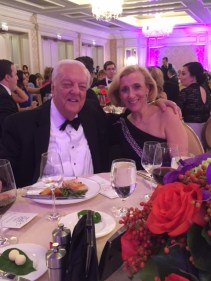
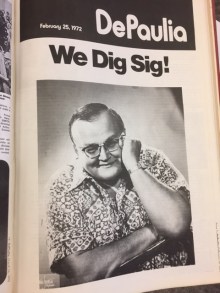 Mr. Geraci clerked for a law firm in the old Peerless Federal Savings and Loan building on the northwest side of Chicago, where Mr. Custer’s partner, Andrew Raucci, established an office when he got out of law school a year or two before Mr. Geraci. After the opening invocation, the rector of holy name Cathedral,
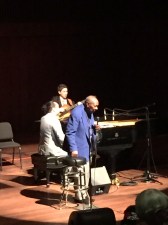 One of the worlds foremost jazz performers, Freddie Cole, performed Friday night at the University of Chicago performance all. Mr. Cole is a Juilliard trained pianist on vocalist, and is the youngest brother of Nat King Cole.
 Mr. Cole was accompanied by guitar bass and drums, and they were fantastic especially the drummer; who would have been up to Nat King Cole standards, but what really stood out was Mr. Cole’s performance of Going Down Slowly. The blues tune Mr. Geraci first heard when he was nine years old looking into the doorway of bars on 41st and calumet where he grew up. Has Mr. Cole said, every house should have at least one Freddie Cole CD in it!
 Bankruptcy Attorney News - Peter Francis Geraci Law, call us at 800 CALL PFG