
5 Star Geraci Law Reviews

5starreviewsNovember 16, 2016: “We contacted your office to do a bankruptcy for myself and my wife. You were very courteous and explained our options. We settled for chapter 13 bankruptcy covering 5 years of payments to our creditors per our trustee instructions. Our 5 years are up. We never applied for another credit card after our filing. We only use checks and a debit card. During our bankruptcy, other lawyers in your office were very courteous and helpful with any problems, when you were unavailable, and questions during the 5 years. Your online client corner is very helpful also. I would reccommend you to anyone for financial problems. Thank you.”

November 16, 2016: “Our experience with our attorney through Geraci law firm was excellent. We were happy with the communication we had and the payments to the court were acceptable for our budget. Thank you for all your hard work!”

November 10, 2016: “My wife and I were born during the Baby Boomer generation. My wife retired a few years ago and has had lots of health issues that came with overwhelming medical bills. I’m still working and hope to retire soon. I also have health issues and lots of medical bills. 

After we listened to Peter Francis Geraci info tapes we decided to get a fresh start by filing for Chapter 13. There were many informative parts in the tapes but when we heard Peter say not to worry we were relieved. The staff at PFG was always professional and would communicate with us by US mail service, phone, text message and / or email. We loved getting updates as to how our case was proceeding.

PFG has a website where we could upload needed documents pertaining to our case. This saved so much time and money.

We highly recommend Peter Francis Geraci Law LLC.”

Week of 11/14-11/18: “I’m glad I chose Peter Francis Geraci to help me file my bankruptcy. I was nervous to start the process but the attorney’s at PFG law made me feel comfortable with my decision. It was explained to me so I understood the process, and when I had questions I felt comfortable enough to call and ask and always got a quick response.”

Week of 11/14-11/18: “Hey my late great friend Ray referred me to the Geraci firm and he had said “They’re the best”. Ashley is terrific! The firm follows up and keeps your case on track. They didn’t miss a beat throughout the entire process. Having gone through the Chapter 13 process, Geraci is the law firm you can trust.”


U.S. Unique in the world as to it’s bankruptcy laws

The United States is unique in the world as to its bankruptcy laws. No other country gives its ordinary citizens the ability to start fresh, without debt, without stripping them of almost all their possessions. Bankruptcy is a biblical law. Its origins are in Deuteronomy 15:1-2 “At the end of every seven years you shall grant a release. And this is the manner of the release: every creditor shall release what he has lent to his neighbor. He shall not exact it of his neighbor, his brother, because the Lord’s release has been proclaimed. The Old Testament is also pretty harsh on lending money with interest: Lends at interest, and takes profit; shall he then live? He shall not live. He has done all these abominations; he shall surely die; his blood shall be upon himself. Ezekiel 18:13.

Attorney Peter Francis Geraci is one of the top experts on bankruptcy law in the United States. His law firm manages over 1.2 billion in debt a year under chapter 7 or 13 of the United States bankruptcy code, under which individuals may either discharge or repay their debts. Geraci Law limits its practice to only three states, in the Midwest, Illinois Indiana and Wisconsin, but files about 1.8% of the bankruptcies filed in the entire United States.

Many people who fled to the New World were escaping debtor’s prisons. The debtor’s prison and London was dug under the bed of the river Thames, so that it was constantly wet and dripping water, and the debtors were trapped by iron grates in the muddy caverns. Oglethorpe founded the colony of Georgia as a haven from debt, but other colonies such as Pennsylvania, owned by the Duke of York, had harsh debtor laws.

pfgflagAfter independence, with the later the signing of the US Constitution in 1787, the concept of ability to free oneself from debt, without horrible repercussions, became enshrined in American law. The U.S. Constitution provides that Congress shall make uniform laws relating to bankruptcy. Article 2 section 8. At various times, Congress did not get around to making bankruptcy laws, and made them only in response to economic crises, such as currency failure caused by state bank failures in 1842. However since 1898, the United States has had a uniform bankruptcy law continuously.

In 2016, about 800,000 individuals filed to either discharge or reorganize their debt. That is less than two out of every thousand and the population of over 360 million. So it is proof that having a bankruptcy law does not affect the economy, jeopardize creditors’ rights, or have anything but a beneficial effect. Those countries that keep their citizens and that, or worse yet, provide no way to borrow unless there is absolutely no risk to the creditor, often find a great disparity between the assets of the great majority of the population, and those of the wealthy elite. Since the United States tightened up its bankruptcy laws, in 1978, and again in 2005, United States is also seen a greater disparity between the rich and the poor.

pfgGeraci Law has been in existence since 1977, starting as a solo practice, and growing to more than 70 attorneys today. Its motto is” changing your life for the better” and that is exactly what the bankruptcy law the United States is designed to do. Geraci Law has been one of the leaders in law firm administration software, having full-time programmers on staff coding in creating proprietary software to manage its multi-office, multi-attorney law practice. Although the practice of bankruptcy law does lend itself to computerization, proprietary algorithms created by attorney Peter Francis Geraci that are embedded in the software, allow the law firm’s management to produce quality legal services at a low cost. Recently, Geraci Law instituted a program to eliminate email, and the attendant virus and denial of service attacks that come with using email, with its proprietary client corner portal, on its websites www.infotapes.com and www.elimAdebt.com.
drawing4

Not Enough Chapter 13 Filings By People Who Need It Part IV

drawing4The next question is how many of them are alive after a year and how much money do they return to creditors. My answer to that is: plenty. This can be seen by just one Chapter 13 Trustee’s payments of over 100,000 a month just to the city of Chicago. The reason I say there are not enough Chapter 13’s filed is we know that the rate of 7 and 13 filings and in most populations is less than one half of 1%. That is because, outside of bankruptcy lawyers and petition preparers, and the US Trustee’s office, who wants everyone to do it themselves, no one is encouraging debtors to adjust their debts in a rational manner.
If everyone who had parking tickets and was employed full-time and had other debt would file Chapter 13 the City of Chicago could disband their collection department, they would not have a problem, and if everyone who filed a legitimate Chapter 13 that had a parking ticket problem went to an attorney who could actually put together a plan that they could live with, the confirmation process in the work of the trustee would be greatly reduced, although the volume would increase. And if the City of Chicago sent everyone who was working full-time and had a parking ticket problem to a competent bankruptcy lawyer for advice, the district would have to appoint a couple more Chapter 13 trustees, dividing up the work, and paying creditors a dividend.

So, one problem the City of Chicago does not have is the bankruptcy courts, unless it is bogus 13’s that are filed by petition preparers and pro se debtors. If Chicago wants to collects its finds it should provide repayment plans, but the problem with that is a lot of people can’t make a repayment plan work, because of their other debt, or because they need guidance in budgeting. Payment plans with the City of Chicago only work if there is no other debt. There has to be a pecking order is far as repayment of debt: people cannot stop making their vehicle payment so they can pay the City. Under Chapter 13 the secured creditors, the debtor’s attorney and court costs, and after that priority debt such as support arrears, and then after that general unsecured creditors, such as red lights and parking fines

The City of Chicago knows that the actual fine for the violation is only a small part of their claim, and if they collect that, at no cost to the City except for filing a claim in Chapter 13, it should be pleased. Generally most of a City claim arises from penalties for failure to pay the original fine, exorbitant storage and towing charges, and fraudulent tickets that were never placed on the vehicle in the first place, and the tickets that the debtor is never going to go to Chapter 13 with, because they are very small $100 or $200, and they know that if they don’t pay them nothing happens anyway.

The City of Chicago needs an intelligent plan to handle their parking ticket in municipal violation and water bills: we think that part of the city’s budget problem could be quickly solved. And there are a variety of other problems that we could discuss. How about the failure of the city to provide safe municipal parking in neighborhoods. The City used to do this for shopping districts, but has no program for residential districts? The City could easily solve this, and a variety of other problems by the intelligent application of modern business principles.


Not Enough Chapter 13 Filings By People Who Need It Part III

drawing4Pro se filings are the largest filer. How many of those have parking tickets or city of Chicago debt is speculative. What we do know is that of the 1904 Chapter 13’s filed in February 2016, 642 or 34% are were dismissed by August, six months later. We also know that 89% of those filed without attorneys, pro se, were dismissed within that time 35% of the largest filers were dismissed within that time and of the other filers, between 30 and 88% were dismissed within that time. Only 12% of Geraci Law 13’s were dismissed within that time, the lowest in the District except for one other filer who does not file very many.
We do not know what percentage of pro se had a parking ticket problem, but we do know that a significant percentage of Chapter 13’s that are filed with firms other than Geraci Law are rapidly dismissed. We also know that filing a pro se case, a Chapter 13 at least, is totally useless, clogs up the system, but is encouraged by the courts with their “filing fee in installment” rule. 88% dismissed in six months is simply lawsuit abuse, and this could easily be remedied by a change the rule to permit no filing unless the filing fee was tendered. Anyone that does not have $310 should not be filing a debt repayment plan. This is also a problem in Wisconsin, but less of a problem where the courts don’t seem to be as amused by pro se filings, but it is a growing problem in Indianapolis in and Merrillville. Often it is caused by petition preparers who are basically stealing from the debtors, and actually been encouraged to do this by the bench and the US trustee since there is almost no enforcement except the occasional example that make out of them.

If the premise of some is that there are too many Chapter 13’s filed in the Northern District of Illinois, they are partially right. They are partially wrong because there are too many bogus Chapter 13’s filed in the Northern District of Illinois, when you add up the pro se in the amount of 13’s that are dismissed within six months. Those 13’s are not returning any money to creditors and are burdening the system. My feeling is they are just not well thought out and they are proposed for purposes of delay and are dismissed before confirmation.

Now, my premise is that there are not enough good Chapter 13’s filed, ones that are valuable and well thought out and that the debtor filing such a plan sees value in. The city of Chicago should give my card to every person who is working full time and has debt other than parking tickets, because these people generally have some ability to pay some debt ranging from 10% to 100%. They just do not have the ability to come up with $5000 or $10,000, or even $2000, their vehicle it has been booted or worse yet impounded and will be sold at auction or crunched within 21 days, and as far as Geraci Law is concerned 88% of these cases the Geraci Law takes are confirmed and start repaying money to creditors.


Not Enough Chapter 13 Filings By People Who Need It Part II

drawing4Chapter 13 is a debt repayment plan, and returns a substantial amount of money to creditors every year. Creditors usually get, somewhere between a proposed 10%, up to one hundred percent of their debt, paid to them by the Chapter 13 trustee. The amount, however, is speculative, because of several factors.
There are more people filing Chapter 13 debt repayment plans in the Northern District of Illinois, which includes the Chicago Metropolitan area, then in any other district in the country. The problem with Chapter 13 filings in the Northern District of Illinois is that there are not enough of them! It’s not that there are too many. The only reason that there are more Chapter 13 cases filed around Chicago, and in particular in Cook County, is because that the Northern District of Illinois has historically been in the top three filing districts of Chapter 13’s, and of Chapter 7’s, in the country for the last 30 years. This is a function of population and the economics of the area.

There are relatively more Chapter 13’s in areas that are not terribly economically depressed, where you have a lot of population, and a significant population portion of the population s has the ability to make some repayment on their debt. In other words there is a “middle class”, or more properly a working class (or you might want to call it a working poor) that makes between 30 and $100,000 a year, can obtain credit, has some excess income with which to repay their bills, but perhaps not enough to do it without some adjustment of debts.

The second reason there are a lot of Chapter 13’s in the northern district of Illinois is that where you have population who is working and not of the subsistence level as you find in some areas like Las Vegas, where a lot of people that are working three part-time minimum wage jobs if they are working at all, is that in Northern Illinois there is a small bankruptcy bar who is willing to do Chapter 13 cases, together with a bench that is not hostile to Chapter 13 and that does not make it incredibly difficult and nasty, as they do in Florida. In some districts that do not have a high numerical count such as the middle District of Tennessee, they have a high percentage of Chapter 13 plans, because of the policies of the trustee and the bench, certain social economic aspects such as refusal of lenders to land without security, lack of exemptions to protect property in Chapter 7, religious attitudes, and other factors that make Chapter 13 the only solution to stop wage garnishment and bill collectors.

One factor is that the Bankruptcy Court, and the court clerk, at the direction of the office of the US trustee in the bankruptcy court, is encouraging pro se filers to file Chapter 13’s with no lawyer. Pro se filings of Chapter 13’s as of September 30 were 1192, with 1940 pro se Chapter sevens. Pro se Chapter 13’s are the third largest filer of Chapter 13’s in the northern district of Illinois after the #1 Chapter 13 filer, with 5456, and Geraci Law of 2384, all as of September 30. After pro se with 1192 the next highest number of filings was 456 next 335, and then a dozen firms with between 100 and 200. Only 20 entities file more than 100 Chapter 13’s in this time.


Not Enough Chapter 13 Filings By People Who Need It Part I

drawing4Peculiar to the Chicago area, is the existence of a large amount of debt owed to governmental units, such as City of Chicago for red light and parking violations and water bills, the State of Illinois Department of unemployment security for unemployment overpayments, Illinois Tollway authority for toll violations, and the County for property taxes. These may be compounded by a bizarre multiplying of penalties in no proportion to the original fine, municipalities who issue fines which are not penalties. Such fines and debts can be discharged under Chapter 13 but not under Chapter 7. This is what prominent consumer bankruptcy attorney Peter Francis Geraci had to say about debts owed to governmental units, such as parking tickets.

“Debts owed to governmental units, such as parking tickets, red light cameras, toll, water bills, and property taxes, are debts for which there is often no solution other than Chapter 13 Debt Repayment. A vehicle that is booted or impounded, or a license that is suspended, because of multiple parking tickets or red light fines, usually in the $2-6000 range, can be rescued by a successful Chapter 13 Plan. Geraci Law is the third largest filer of Chapter 13 cases in the Northern District of Illinois. However, only 25% of our Chapter 13 cases in the Northern District of Illinois, which includes the suburbs and Rockford, have any parking ticket component. In most of those cases, if not all, there is also secured debt such as a vehicle or a home and other debt. There are very few pure parking ticket or red light camera ticket Chapter 13’s. There are Chapter 7 filings with a parking ticket or municipal debt listed, but since those debts are not discharged, the purpose of the Chapter 7 filing is to eliminate other debt, so that the debtor may possibly devote their excess income, if any to clearing up the government debt.”

Geraci Law 5-Star Reviews

5starreviews

November 2, 2016:Rodney and John in the Merrillville office were very helpful, made me feel like there’s still hope and I’m fixing my financial problems instead of hiding and avoiding phone calls from my creditors. I feel like I have a fresh start. Would recommend to friends and family.”


November 4, 2016: “Jason, Lisa, and Tarek were very direct and explained the whole process to me. When I was unsure of something, I asked and I got a direct and helpful answer. They were great.”

October 24, 2016: “A few months ago, I contacted the Geraci Law firm. With so many things crashing down on me and medical bills piling up, I felt overwhelmed and stressed out. Filing chapter 13 was an option I was curious about and after the thorough consultation, I filed and everything was a bit better. A few months later, I found myself with a few variations in my personal situation and I was once again faced with a dilemma on how to deal with it. I called for a consultation to handle it and was put in contact with Ashley.”

“Once again, the lawyers at Geraci were thorough and consistent!!! Ashley was very helpful and knowledgeable. She answered my questions quickly and helped settle my stressed out nerves!”


Geraci Law Wins Adversary Proceeding

drawing4On October 24th, 2016 Judge Janet Baer  issued her opinion on Adversary 15 A 00550 (Click for Details).  The plaintiff, Chicago Patrolmen’s Federal Credit Union filed a complaint with the Federal Bankruptcy Court, asserting the client’s debt was not dischargeable; pursuant to rule 523(a)(2)(B).  Peter Francis Geraci and Geraci Law Attorneys disagreed.

The plaintiff claimed the debt was not dischargeable because the client obtained a second loan from the Chicago Patrolmen’s Federal Credit Union under false pretenses and intended to deceive Chicago Patrolmen’s Federal Credit Union.

After a 1 day trial, in Federal Court, Judge Baer disagreed with the Plaintiff.  In her 18 page opinion, Judge Janet S. Baer ruled the Plaintiff failed to meet their burden of proof.  Failing to prove the fourth element in a claim under 523 (a)(2)(B), by a preponderance of the evidence.  Namely, the debtor intended to deceive Chicago Patrolmen’s Federal Credit Union when obtaining a second loan.

Instead, the evidence presented in the case proved Geraci’s Client didn’t act with a reckless disregard when applying for the loan and did not try to deceive the Credit Union. The court determined Geraci Law’s client testified credibly when she believe she could pay the loan taken from Chicago Patrolmen’s Federal Credit Union.  Attorney Ryan Fojo, who tried the case for Geraci Law, presented a credible case; with facts to support the client’s position.

Peter Francis Geraci & Holly Geraci attend the Holy Name Cathedral Annual Parish Gala

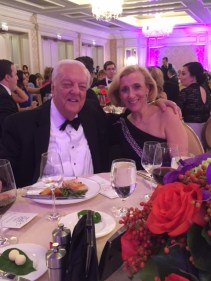
img_3720Holly Geraci and her husband, Chicago attorney Peter Francis Geraci, attended the Holy Name Cathedral annual Parish Gala at the four seasons Hotel on Friday, October 29. Although Holy Name is a Cathedral, it is also the home of a parish of communicants. The annual gathering of parishioners raises money for the charitable work of the cathedral itself. Holly and Peter were very happy to be invited by Kathy Barr, a parishioner, and to meet new and old friends. At Kathy’s table were Stanley Kusper and his wife. Mr. Kusper is best known as the former Chicago City Clerk, and a partner in the prominent law firm of Kusper and Raucci.

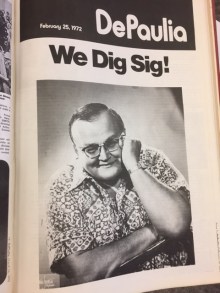
img_3726  Mr. Geraci clerked for a law firm in the old Peerless Federal Savings and Loan building on the northwest side of Chicago, where Mr. Custer’s partner, Andrew Raucci, established an office when he got out of law school a year or two before Mr. Geraci.  After the opening invocation, the rector of holy name Cathedral, Rev. Gregory Sakowicz, was introduced and welcomed everyone. It was then that Mr. Geraci asked if the Rev. was related to legendary Chicago entertainer Sig Sakowicz.   Mr. Geraci was the editor of the Depaul University newspaper, the De Paulia, in 1972, and also a big fan of Sig. Sig was featured on the cover of the April 25, 1972 issue. Kathy introduced Mr. Geraci to Rev. Sakowicz, who was quite surprised to hear of Mr. Geraci’s admiration for his dad and Rev. Sakowicz’s sister, who is an attorney with Clifford law firm in Chicago.

Rev. Sakowicz is an avid longtime birdwatcher, and his auction of the early morning springtime birdwatching trip to Montrose Harbor, to view the southern migration, was “avidly” bid on; obtaining $3,000.00 in bids, one from Mr. Geraci.

Peter Francis Geraci a Partner of the 2016 Keystone Society Members

cropped-geracilawlogolarge.pngPeter Francis Geraci has become a partner of the Keystone Society Members for the Indiana Bar Foundation.  Mr. Geraci donates to a number of Bar Associations.  The Indiana State Bar focuses on helping individuals who need a lawyer, but may not be able to afford a lawyer.

The Keystone Society was created to raise awareness and to get more lawyers to donate to the bar foundation.

Mr. Geraci, a member of multiple state bars, regularly contributes to bar foundations.  He understands the importance of helping individuals who need a good lawyer, but have limited funds.  Mr. Geraci recently accepted a case in East Moline; as he is among a list of lawyers who accept pro-bono cases.